
Home > Other Technologies
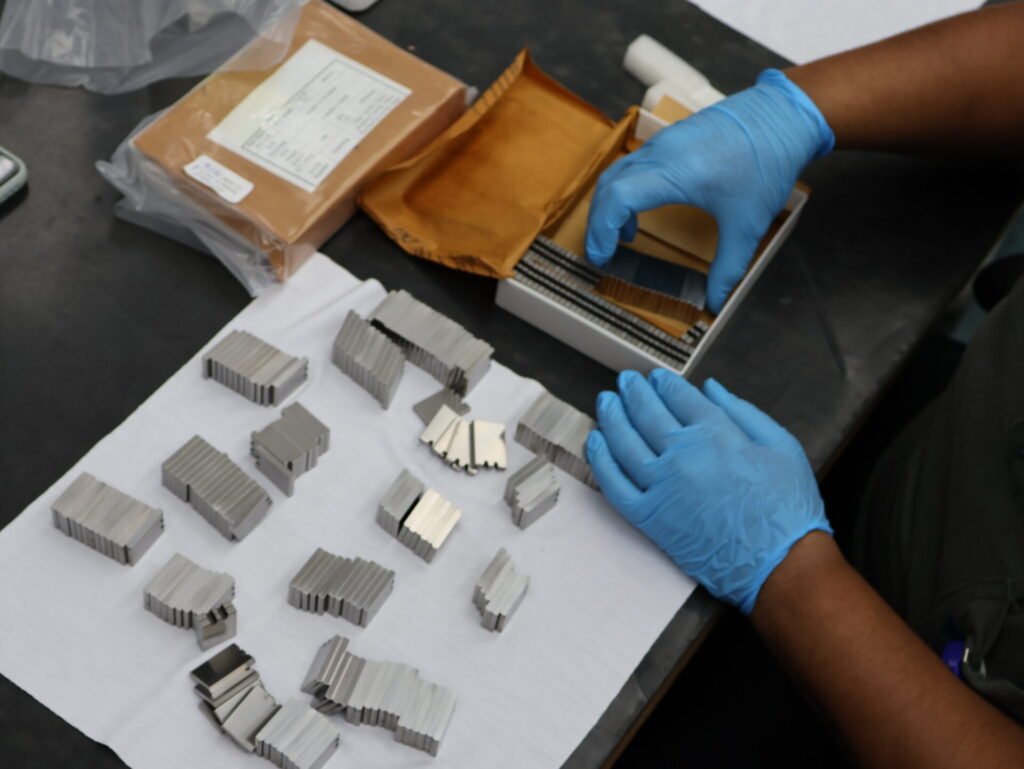
FERROBLACK® processes constitute the HEF Group’s main technology for hot black oxidation. The treatment is conducted at temperatures between 135 and 140°C, using caustic solutions capable of promoting controlled oxidation of the metal surface. At the end of the cycle, the substrate surface is converted into a layer of magnetite (Fe₃O₄), black in color and with high adhesion.
Because it is a chemical surface conversion process, and not a deposition process, there is no dimensional alteration of the treated parts, nor is there a risk of delamination or peeling of the formed layer. When combined with water-repellent protective oils, also part of the FERROBLACK® system, a significant increase in corrosion resistance is obtained in neutral or slightly alkaline pH environments, such as in applications subject to contact with transmission system oils.
Additionally, the conversion layer helps mitigate adhesive wear mechanisms in components with sliding or rolling movements. In particular, its use is recommended for applications that require improved running-in behavior, reduced micropitting, greater resistance to hydrogen permeation, and a decrease in adhesive wear phenomena such as smearing, galling, and scuffing.


Considering the combined benefits of corrosion and wear resistance, coupled with the high competitiveness of the FERROBLACK® process, its application has expanded to various types of components, such as bearings, transmission system elements, electrical contact components, fasteners, screws, hand tools, structural supports, and armament components, among others.
Consequently, the solution effectively meets the demands of different industrial sectors, including:
The BLACKFAST® process is the HEF Group’s main solution for cold black oxidation. The treatment is carried out at room temperature (20 to 30°C) using concentrated BLACKFAST® solutions, previously diluted in water. The resulting chemical reaction promotes the formation of a uniform and adherent black coating on the metal surface.
Characteristics obtained with the BLACKFAST® process:
Dimensional Stability:
Because it is a surface conversion process and not a deposition process, there is no alteration of dimensional tolerances, making it suitable even for high-precision parts and for applications where metallic coatings or paints are not acceptable.
Corrosion Resistance:
The resulting layer exhibits a high capacity for retaining oils and protective agents, keeping them in close contact with the substrate and contributing to a significant increase in corrosion resistance.
Acabamento Estético:
It provides a homogeneous black color, giving a superior visual appearance and enhancing the perceived quality of the component.
Operational Security:
Reducing light reflection on treated surfaces decreases eye strain for operators in work environments.
Furthermore, implementing a BLACKFAST® line requires a low initial investment, considerably lower than that of hot black oxidation processes, making the solution viable for both small and large production scales. Its operational simplicity and high versatility justify its increasing use.
The BLACKFAST® process adds value to the component while offering functionality and cosmetic appeal. Typical applications include: cutting tools, springs, valve bodies, tool holders, fasteners, molds, hydraulic components and blocks, chains, gears, sprockets, screws, hand tools, and various automotive components.
Sectors that utilize BLACKFAST® technology:
CERTESS® OPTAL is a family of precision coatings from HEF intended for optical applications, such as reflectors, anti-reflective and anti-scratch solutions, offering a wide range of solutions for photonic components.
This solution offers diverse possibilities for optical and optoelectronic systems used in various industrial sectors, such as automotive, aerospace, military, agricultural, and security.
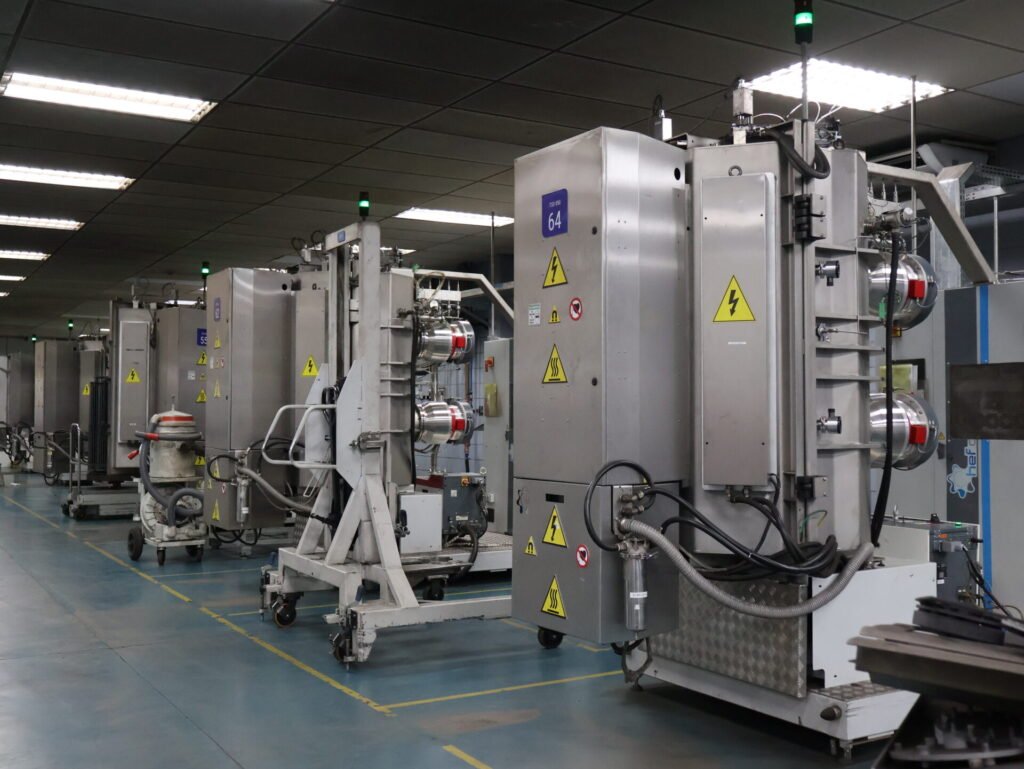
CERTESS® OPTAL multilayer coatings are obtained via a PVD (Physical Vapor Deposition) process, which allows for high deposition precision and layer customization for optical applications in particular.
.

Features:
– Wide range of depositable materials: chrome, aluminum, gold, specific alloys;
– High purity of the coatings;
– Control of thickness and surface finish;
– Resistance to chemical attack (depending on the type of coating);
– Suitable for use on large parts;
Materials that can be treated: – Glass – Plastics – Organic matrix composites – Ceramics – Cermets – Metals and alloys
Examples of applications: – Displays – Screens – Bottles – Architecture – Lenses
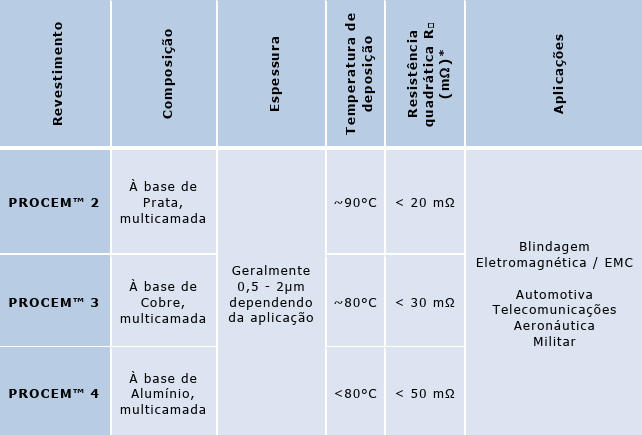
CERTESS® PROCEM® is a family of multilayer metallic coatings used for electromagnetic shielding of systems and applied to polymers and composite materials.
The use of highly conductive coatings on plastic parts provides efficient shielding without the need to change materials or component design. This avoids the addition of extra parts for system protection, making the treatment economically viable.
Esta solução oferece diversas possibilidades a sistemas ópticos e óptico-eletrônicos utilizados em vários segmentos industriais, como automotivo, aeroespacial, militar, agrícola e de segurança.
The thickness of these deposited layers generally varies between 0.5 and 2.0 µm, depending mainly on the shielding specification. The temperature of the deposition process can be adjusted to the substrate material and usually occurs below 90ºC.
Features:
Suitable materials for treatment:
Examples of use: • Weapon components • Telephony • Connections • Sensors • Printed circuits • Heating elements • Satellite antennas