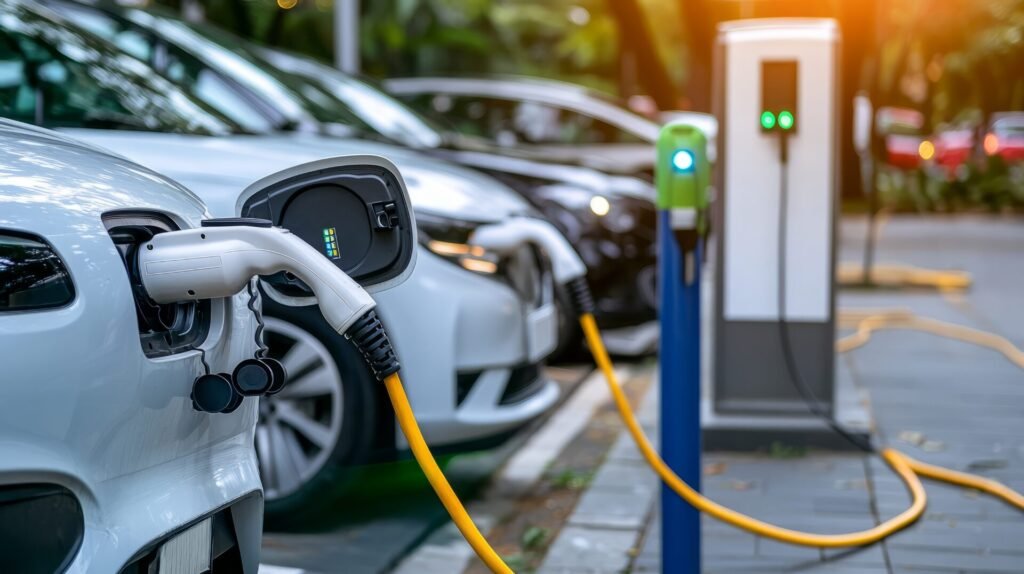
The Brazilian mobility sector is undergoing a strategic restructuring driven by federal innovation policies, the advancement of electromobility, and increased productive investments, encompassing the modernization/construction of industrial plants, the nationalization of suppliers, and the expansion of laboratories and R&D centers. Programs such as Rota 2030, Finep’s funding lines, and Fapesp’s calls for proposals have accelerated technological development and stimulated more robust and competitive industrial solutions.
The entry of Chinese automakers and their partnerships with the Brazilian government are reinforcing the demand for local production of electric and hybrid vehicles. To fully access government incentives, there is a growing requirement for the nationalization of critical components, including braking, suspension, powertrain, and body structure subsystems, which demand advanced engineering, fine tolerance control, and field-validated performance.
In the heavy-duty segment, the government has been expanding incentives for the renewal of urban bus fleets, boosting partial and total electrification projects in major cities. Simultaneously, the main commercial vehicle manufacturers are investing in the modernization of their logistics fleets, incorporating more efficient powertrain systems, highly durable transmissions, more robust braking systems, and strategies to reduce TCO (total cost of ownership). This movement demands more resistant components with greater mechanical reliability and stable performance under severe loads, increasing the relevance of surface treatments focused on extreme durability.
In the agricultural market, the pressure for productivity, sustainability, and reduced environmental impact is accelerating the replacement of traditional technologies with cleaner surface solutions, which use fewer critical inputs and offer greater tribological efficiency. Agricultural machinery operates in highly abrasive and corrosive environments, where wear, particle adhesion, surface fatigue, and oxidation are critical factors. Manufacturers and suppliers are seeking sustainable alternatives that maintain—or increase—levels of mechanical strength, lifespan, and reliability. This reinforces the need for industrially scalable technologies aligned with modern environmental requirements.
This concentration of technical complexity, aligned with the “Cradle to Grave” concept, raises the requirements for durability, sustainability, and functional efficiency imposed on parts in all mobility segments. The pressure for longer service life, reduced friction, mitigated wear, corrosion resistance, and noise reduction makes surface performance a central element in product development.

This concentration of technical complexity, aligned with the “Cradle to Grave” concept, raises the requirements for durability, sustainability, and functional efficiency imposed on parts across all mobility segments. The pressure for longer service life, reduced friction, wear mitigation, corrosion resistance, and noise reduction makes surface performance a central element in product development.

It is in this context that HEF acts as a strategic partner to automakers and system integrators. With consolidated technologies in surface engineering, especially CLIN™ nitrocarburizing (ARCOR®, SURSULF®, TENIFER® and QPQ®) and PVD/PACVD deposition – CERTESS® CARBON (DLC), which increase wear resistance, improve tribological behavior, increase fatigue resistance and strengthen anti-corrosion protection — HEF directly contributes to greater durability, operational reliability and dimensional stability, reduced operating costs, and support for nationalization with standardized and scalable processes.
To learn more about our successful technologies and components, contact our engineering team!